
Amazon Rainforest is commonly referred to as the lungs of the planet-a living, huge system that generates oxygen, balances climate and a biodiversity which is unmatched. However, it is being striated today.
Uncontrolled exploitation, uncontrolled wildfires and illegal logging are eating the forest up at an alarming rate. Once a huge impenetrable green, it is now left riddled with scars of greed and indifference.
But in the smoke and gloom there is hope too. Activists, indigenous leaders, scientists, and everyday citizens are fighting all over the world to save this ancient forest before it is too late.
Why the Amazon Matters
The Amazon is the largest area and it covers a space of more than 5.5 million square kilometers in the nine world countries (all in South America) with the greatest amount in Brazil. It harbors:
More than 400 billion trees
It has now been found that one in every ten known species
The total population is above 30 million individuals composed of 350++ Indigenous peoples
• It is one of the carbon sinks in the world with the largest quantity of carbon absorption in it
The destruction of the Amazon is not only harmful to the region, it also has impact on the climate, water cycle, and biodiversity of the world which maintains life on earth.
Illegal Logging: Silent Destruction
One of the covert but the most devastating threats to the Amazon is illegal logging.
Key Facts:
Timber is taken through clearance of vast parts of land either without permits or without sustainable methods.
High-value hardwoods such as the mahogany and cedar wood are smuggled and targeted.
Logging tracks tend to result in increased forest clearance and poaching as the arrival of roads can facilitate both activities.
Acts of these operations are regularly associated with organized crime, corruption, and violence on Indigenous defenders and environmental activists.
Worse still, a lot of the wood finds their way into global supply chain where it becomes furniture, flooring, or paper which is miles away off the forest.
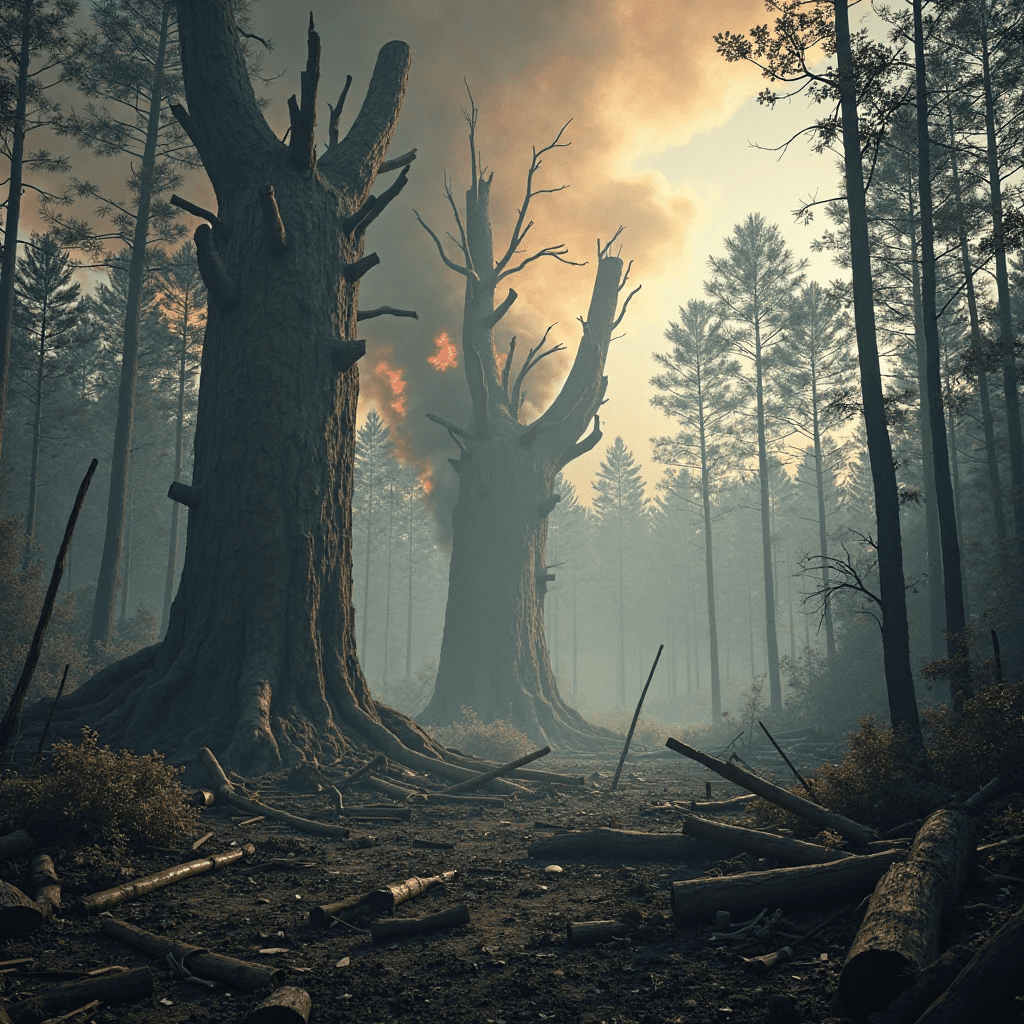
Fires: The Amazon in Flames
Naturally, fires are unlikely to occur rationally in Amazon because of the humid climate. However within the last few years fires have doubled and this is mostly attributed to:
• Cattle grazing especially on a slash-and-burn basis
• Purposeful land clearing by outlawed loggers or immigrants
• Drier seasons worsened by the climate change
In 2019 alone, more than 72,000 fires were reported-most of which can be seen on satellite photos. Whole world ecosystems burned down that drove away the wild life and polluted the skies.
These fires do not only concern local calamity. The amount of CO 2 they emit is huge and it promotes global warming as well as lowered carbon absorption capacity of the forest.
The Ripple Effect: Climate, Water, and Wildlife
The Amazon deforestation and fires have long-term effects:
• Climate Disruption: The Amazon balances rain fall in South America. As there is less forest, this means less rain, this means droughts in large agricultural areas.
• Carbon Emissions: Deforestation has turned some section of the Amazon into a net carbon-emitter, and exacerbated climate change.
• Biodiversity Loss: Habitat loss is taking place rapidly against species such as jaguars, harpy eagles, and pink dolphins.
• Water Cycle Collapse: This is because the forest has its own rainform; it is through evapotranspiration. Cut down enough trees and the whole system can dry up to savannah.
Scientists caution that we are rapidly reaching a “tipping point”- the point beyond which the Amazon can no longer be able to act as a rainforest.
Indigenous Communities Under Threat
The Indigenous have coexisted with the forest for thousands of years. Now they are in the forefront of its defense–and of its destruction.
Challenges faced:
• Invasions of land by miners, loggers and settlers
• The use of threats, violence, and assassinations of the community leaders
• Losing the ability to use traditional medicines, food and sacred places
Forced displacement: Cultural erosion
Nonetheless, quite several Indigenous people still fight and defend their ancestral territories with unbelievable might. They are forest owning people and not just people living in the forest.
Policy and Politics: The Human Factor
When it comes to Amazon science doesn t have many weapons, but a government policy may either save the Amazon or can be turned into a weapon.
Deadly incursion on deforestation has been enhanced over the past years by the laxity in the implementation of environmental regulations and political rhetoric that promotes development.
Certain governments:
• Reduce environmental agencies budgets
Reverted Indigenous land protection
Concluded agreements to encourage mining and farming in conserved areas
International trade agreements and international markets also contribute and indirectly encourage destruction of forest by demanding beef, soy, palm oil, and timber.
Resistance and Resilience: Grassroots Hope
Nevertheless, there is some good news on the ground:
Land reforestation programs are generating degraded land.
Eco-tourism projects render value to standing forests.
The indigenous groups such as COICA and APIB are internationally making demands on protection.
It is also reporting that women-led forest patrols are checking illegal activity and instructing conservation.
Indigenous resilience is vindicating the fact that locals who dwell on the forest usually have the best idea on how they need to save it.
Global Movements and Eco-Solutions
It is not a local or a national matter of the fight of the Amazon, but the whole world is aware.
What’s working:
Boycotts and bans against illegal-source timber
Sustainable eco-certification approaches to agriculture and logging
• Satellite surveillance of organizations such as MapBiomas and Global Forest Watch
Youth movements that are asking climate justice
• Forest preservation schemes which reward carbon credits
We as consumers have power. We can all help in the solution by switching to sustainable products, promoting policies to make the planet greener, and getting the word around.
Conclusion: Fighting for the Forest’s Future
There is a put at the crossroads in the Amazon. These threats are real: chainsaws, flames, bulldozers and greed. However, so are the protecting powers: local communities, scientists, activists and conscious citizens globally.
It is not only a fight over biodiversity, or over climate, it is a moral fight over the soul of our planet.
By doing this here and now, perhaps with urgency, unity and with respect, we may yet save the Amazon, in future generations. Since when the forest dies, there is much more than trees that are lost.
We lose a life, wisdom and hope source.