
Can you imagine a world in which the sun makes little or no appearance on the surface of the earth, where the very air is filled with the melodies of the yet unseen organism, and where every step of your foot will reveal some discovery which is older than the pyramids and more sacred than the Bible itself? It is this Amazon Rainforest, the biggest tropical forest on the planet and one of the most essential systems on planet Earth.
The environment also includes the Amazon which encompasses nine countries and covers more than five and a half million square kilometers and therefore should be viewed more of a planet rather than a forest run. Here in the pages that follow we venture down to this great pulsing superspace to uncover her secrets, her peoples, and those miracles that give it such indispensable value to life on our globe.
Welcome to the Amazon: A Living Wonder
The Amazon rainforest is more often described as the Earth lungs. It produces about 20 percent of the oxygen in the world, harbors around 10 percent of all the known species and balances climate, water and carbon cycle. The area is peopled by:
390 billion trees of more than 16,000 species
Over 3000 varieties of fish
Millions of moles, birds, mammals and reptiles and insects
But statistics can only show so much regarding the uniqueness of the Amazon; it is also a place of mysticism and grandeur, an alive thing throbbing and buzzing with life and energy.
Beginning the Journey: From Andes to Amazon
The journey starts with the Andes Mountains where the glacial streams flow and eventually make an imposing river. Beginning as we do in Peru and Ecuador we make our way through the green abyss to which the mists drive on a wind roped over tree-tops and liana lianas hang out like door-hangings.
Iquitos, Peru being one of the biggest municipalities without any overland connection, we take a wood made boat that carries us into the forest via the river. The journey is itself planned, allowing the jungle at least to be presented in a sequence of scenes, chapter by chapter.
Rivers: The Arteries of the Jungle
In the Amazon basin there are practically no formal thoroughfare, but network river systems cover the territory. The Amazon River only in length second to the Nile is the greatest in volume and disgorges upon the oceans more water than all the other next seven greatest rivers combined.
In a trip up the blackwater and whitewater creeks the following views are seen:
• Boto or the river dolphins- they come in the presence of the boat
Kids playing and swimming and yelling around wooden houses built on stilts
Fishers throwing in net wove in the first morning light
Such waterways serve not only to serve as shipping channels but also as a key life-supporting system as they establish connections between communities, habitats and narratives.
Unveiling the Biodiversity
Every phase on the part of the river reveals new aspect of life. Inclosed within literal bounds–a few square kilometers–it is possible to find:
200 varieties of trees;
1,000 species of insects;
• zoned off wildlife, including sloths, poison dart frogs, jaguars and harpy eagles.
The canopy above is crossed on the feet of primates, the fungus ants, leafcutters, parade below in regimental columns taking the leaves they have cut away to their underground gardens.
The air is full of inhabitants: moths as large as a human hand dart past the line of your sight, hummingbirds flash by like emeralds and cicadas perform the most euphonious natural orchestra.
Forest Sounds and Hidden Life
As the sun sets, the forest is changed dramatically. There is howling, chirps, croaks, and rustle of the jungle emanating in the night.
Howler monkeys are yelling in the far-off treetops.
• Tree frogs call in order to get a mate.
Above the riverbanks the fireflies are winking out like tiny tinseled balloons.
There is a predator lurking somewhere hidden.
Camping in the jungle proves that the nature does not sleep; even in the dark the Amazon lives and beats with the wild power.
Indigenous Communities: Keepers of Ancient Knowledge
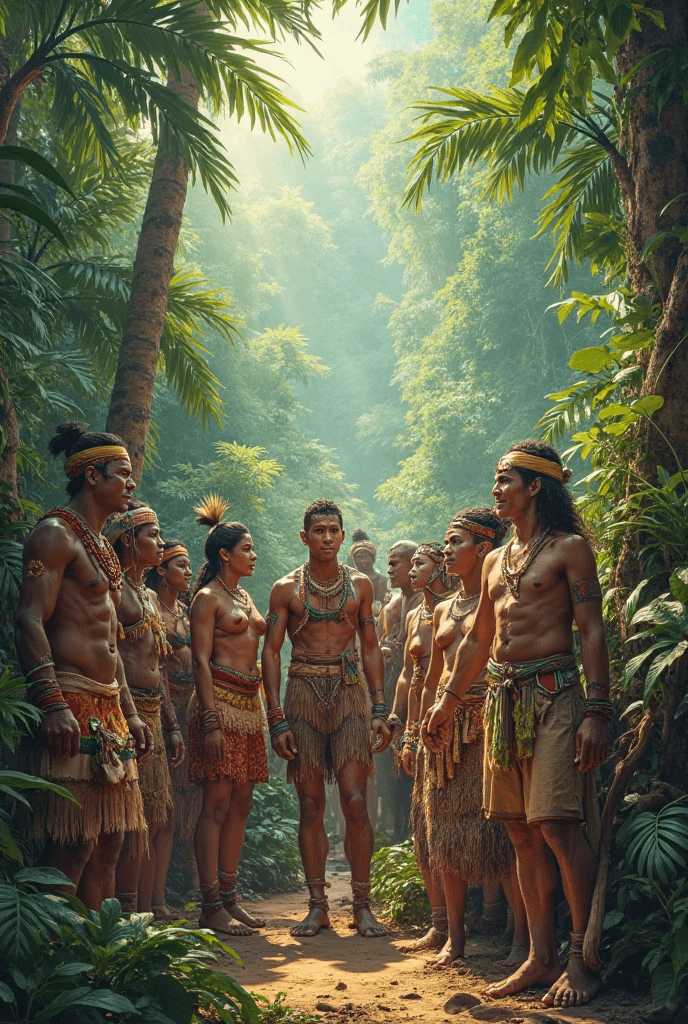
One cannot be able to appreciate the Amazon without interacting to its people. There are over four hundred indigenous people living in and near the rainforest and some have gone completely isolated yet there are some who openly receive visitors unafraid to show them their villages.
The Ticuna, Yagua, Kayapo and Ashaninka are first among these, with their elders holding deep knowledge of the forest passed down through several generations:
• Plants were used as medicine to deal with fevers, wounds and even cancer.
• Sustainable practises of hunting and fishing.
• Religious beliefs to give animals, rivers and trees souls.
Being in a maloca (traditional communal house) and hearing what elders of the tribe say, the Amazon turns out not only to be a geographical entity but also a realm of culture full of stories, knowledge, and spirituality.
Challenges on the Trail
The Amazon is an untamed environment and at the same time an absolutely impressive landscape. Both travelers and residents need to be ready to meet experience:
• A high level of humidity, and instant rainfall River
• bats and other biting bugs
Narrow range and wavy paths, rich plants and animals
These barriers emphasize the fact that visitors are visitors to a strong wild where respect and humility should be the main issue.
At the same time the forest is faced by a greater challenge:
Deforestation-logging and agriculture
Fires and outlaw roads
• Rainfall patterns going astray due to the influences of climate change
Each tree cut down and each stream of water poisoned is like a wound in the living body to which we belong–and to which we should reveal ourselves.
Reflections on a Fragile Paradise
As our journey comes to an end, it dawns on us that the Amazon is not just a place – it’s a miracle that so seamlessly blends terror, allure, vulnerability and power.
To be among ancient trees, listen for the voice of birds and see a culture that sees the forest more like a relative than a resource is to be reminded of what it means to live in harmony with Earth.
The forest is a teacher to us:
• Becoming splendid in other words to move purposeful
•scpForePay to listen before acting
•That interdependence, not the power trip, is the way to the future
Conclusion
A tour of Amazon Rainforest is an experience or expedition of the past, spirit and nature. In this world, the past and the present co-exist; rustling leaves, flowing rivers and the tune of tribal chant all are manifestations of the voice of the forest.
The Amazon emphasises that the strongest ecosystems of the planet are the most vulnerable and that protecting this biome is tantamount to preserving a part of humanity.
Both done physically and as a part of a narrative effort, visiting the region clarifies our relationship to the planet as well as our relationship to ourselves being a part of it.