
1. Introduction
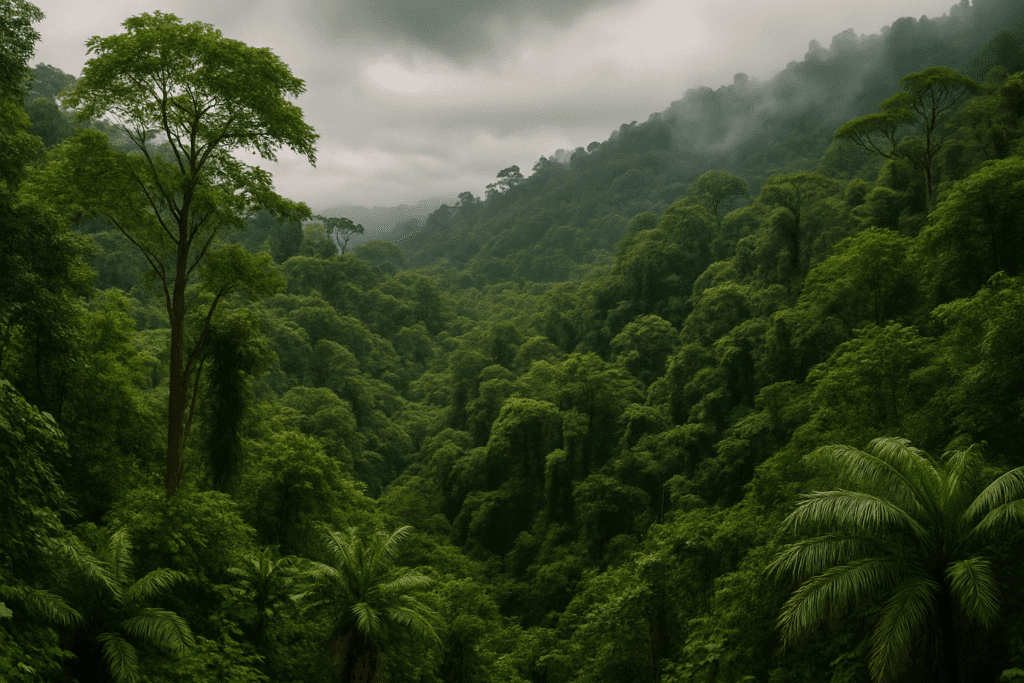
At the heart of Central Africa, the Congo Rainforest is the embodiment of an immensely spacious, little known world-a sphere of unprecedented biological diversity, astounding natural abundance and natural power. The Congo Basin with a span spreading up to 500 million plus acres is the second largest tropical rainforest after the Amazon and covers six countries.
This area is one of the last frontiers on the planet: the habitat of species that do not exist elsewhere and thus a nursery to cultures that have existed over millennia in harmony with nature.
But the Congo forest is not just a tourist attraction site visited by the adventurous explorers; it is the foundation of climate stability in the entire world and a source of the much needed resources to millions. To travel inside it is to go into geologic and even ecologic time, to what is in many respects an environment not prone to modern convulsions.
2. An Elephant Among Woods
The Congo Basin stretches across the Democratic Republic of Congo (DRC) and through the Republic of Congo, Gabon, Cameroon, Equatorial Guinea and the Central African Republic and covers the second-largest tropical rainforest on the planet. It is divided up by maze like river networks, swampland, and vast savanna.
The Congo River – the second-most voluminous river in the world runs as an ancient artery throughout the whole territory of this vast forest, connecting people and helping them to live, to create lifelong legends.
Its remote location, size and complexity are the reasons why it has been largely unexplored and this gives the modern scientists and conservationists unrivaled chances to exploit and preserve the last wilderness.
3. Wildlife of the Congo Basin
Life thrives in Congo Basin with a huge portion that cannot be found elsewhere. This region is home to around 10,000 plant species, 1,000 bird species and 700 fish species as well as 400 mammals, and dozens of amphibians and reptiles. Some of its most iconic residents are the Western lowland gorilla, forest elephants which are comparatively small and elusive in comparison to their relatives of the savannah, the endangered bonobo which is one of our closest genetic cousins and the unneeded okapi who resemble a zebra-like mammal found elsewhere in the Congo. There is an enormous variety of insects, fungi and microorganisms that are unclassified and occupy the forest.
4. First roots of The Forest
Congo Rain Forest dates back millions of years ago when there had been no Ice Ages. The Congo has survived mostly intact whereas many tropical forests have been chopped up by changes in climate experienced during ancient times. This has left the Congo in a position to preserve a living record of the evolutionary history of the planet.
It is very old and stable and has given way to extremely complex ecosystems where species have evolved alongside each other throughout millions of years. This renders it one of the most genetically diverse centers in the world which are paramount to food security and health across the world.
Some researchers are convinced that the Congo could provide some insight into medical breakthroughs, in particular in plants that have developed unique chemical defenses.
5. Life in the Heart of the Rainforest
The Congo lies in the middle of the rainforest and thus it has become synonymous with wilderness but it is also associated with a long and large human presence. There are over 75 million residents of this region besides the indigenous groups; the Mbuti, Aka, and Baka people. To these people who live in the forest, the forest provides food, medicine, shelter, and good spiritual aspect. These people are closely connected to the natural rhythm of the forest; the songs and imitations of birds are heard and the oral culture tells the stories about how to navigate and survive and both trees and rivers have great meanings.
With such a strong connection, it seems that these societies have now been threatened by external forces as well as the destruction of the environment. This means that the views they hold matter more in conservation because modern observers realise that strengthening indigenous management is the key means of protecting the Congo.
6. Environmental Challenges
Despite being geographically isolated, there are a number of environmental pressures on the Congo Rainforest. Among threats there are:
• Destruction of forests, due to logging, and agricultural, and mining activities.
• Gorilla, elephant and pangolin poaching and wildlife trade.
• More infrastructural development; that is, road and dam construction and settlement building, which is fragmenting the ecosystem.
• Climatological changes, which regulate the level of rainfall and increase the rate of forest fires.
The destruction or loss of forests occurs at the rate of about 1 million hectares per year leading to extensive degradation of habitat together with resultant release of volumes of sequestered carbon to the air.
—-
7. Conservation and Hope
Preservation and Promise
This is owed to the notion of tangible hope that can be ascribed to expanding cluster of conservation sites, place-based undertakings, and international partnerships. NGOs like WWF, Rainforest Foundation and the Wildlife Conservation Society collaborate with both governments and indigenous communities protect the habitats and promote self-sustainability. These are some of their main strategies:
• Creation of water zones and expansion of such areas
• Promoting sustainable livelihoods and eco-tourism •
• Increasing guarding of poachers
Rehabilitation of the degraded forests with native species
• Including the communities living locally in the making of the decisions of conservations.
Therefore the conservation of the Congo is not an issue of Africa but can be seen as a worldwide need. Its forests store carbon, its rivers fertilize whole geographies and its unbelievable biodiversity holds answers to the planet.
8. How to Explore the Congo Responsibly
A trip to the Congo requires a degree of preparation, sensitivity, and openness of the mind unlike the practice of taking a regular vacation. But to those who truly love adventure, it will be hard to find a better place than the Republic of Congo and the Democratic Republic of Congo.
Prominent highlights are:
• Hiking in Odzala-Kokoua National Park (Republic of Congo) in order to see western lowland gorillas;
Trips up the Congo river by steamer;
• Venturing into the Salonga National Park, the largest source of tropical rain forest of Africa;
• Sight-seeing in Nouabal-Ndoki National park;
Tours to local villages on local population guidance.
Some of the principles that must be followed in the context of such kind of travel are:
1. Involve operators that are eco-certified.
2. Welcome oneself to the local ways of the land and respect them.
3. Minimise plastic usage and other wastes, during the journey.
4. Donate neither food nor caress wild animals.
5. Choose the activities which will be of direct interest to the resident communities.
9. Conclusion
The Congo Rainforest is a world of wild gorgeousness, primordiality and utter enigma. It is one of the only few lands under the supremacy of nature- where gorillas roam free, powerful rivers cut into the depths of the earth and rich clouds move in through the sights of endless green.
To travel through the Congo is to get a glimpse of probably the essence of Africa itself: fierce, life-giving and divinity. The area reminds people about the primeval sounds of the planet and questions modern civilization about preservation of whatever it has left of its atavistic form.
The Congo in multiple ways is fast becoming a global asset–the rainforest of Africa yes, but also the repository of life, the source of knowledge, the bane of prediction; as climate and environmental pressures mount, the world can no longer ignore its sole existence.