
1. Introduction
New Guinea is the second largest island in the world and is a famous tourist destination owing to its wild nature and wonderful ecological diversity. Divided into Papua New Guinea (PNG) on the east and Indonesia on the western side, the island is also a home to one of the largest remaining Tropical rainforests on the planet. When one takes a step into The Rainforests of New Guinea, he gets to a place that appears to be totally different and out of the daily activities but instead it is teeming with vibrant biodiversity, elusive fauna, and long standing customs. These experiences can be quite humbling and life changing in nature, particularly to those who value nature, culture and discovery highly.
2. Unparalleled Biodiversity
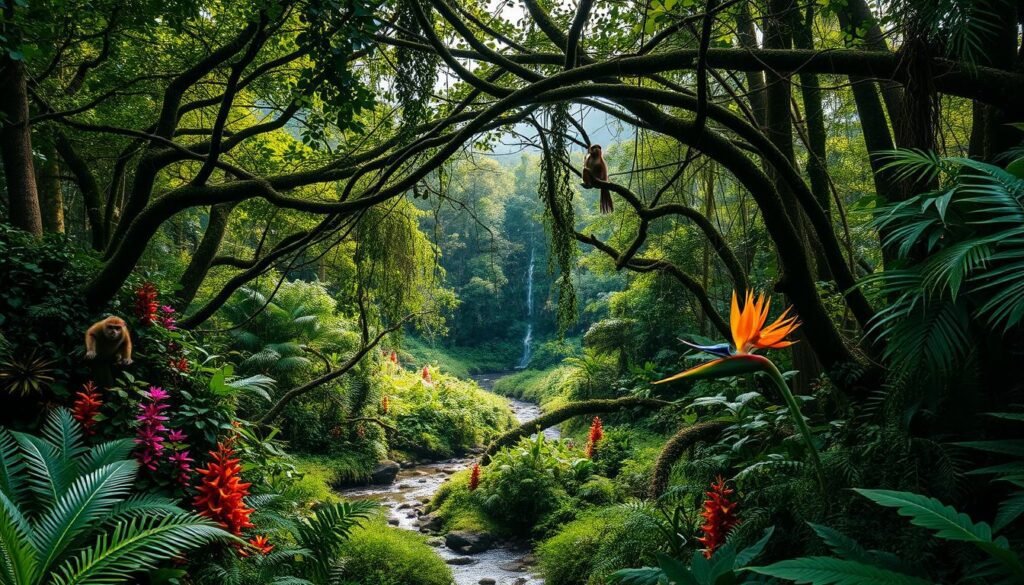
New Guinea presents its rainforests that are one of the richest ecosystems of the planet. Researchers approximated that over 5 % of known animal and plant species in the world live in this region with many of them being exclusive to this region. The forest is a lush network of life which is dense with large canopy trees, odd vines, root systems covered in moss and growing undergrowth.
There are acrobatic leaping marsupials like the tree kangaroo, colorful frogs, camouflaged reptiles, and thousands of exotic insects share the environment. Substantial areas are still so poorly explored, that almost during each expedition a new species is found.
The outstanding biodiversity is as a result of the long geographic isolation due to the high topography of New Guinea (that varied as lowland swamps, and high cloud forests).
3. The Legendary Birds of Paradise
The bird of paradise comes among the most iconic inhabitants of the New Guinea rainforest. One of the first and most famous species of birds to be studied by both local people and natural historians because of its dazzling plumage and courtship behaviour, this species has given rise to many legends across the world. The vivacity of these is proven by the caveat of evolutionary ingenuity through around 40 known species in fresh Guinea.
The birds of paradise also hold great cultural status besides being a complex life form. Many of the native people incorporate their feathers into ritual and ceremonial ornaments and costumes as well as ritual gear. These are the bird inhabitants who often lurk in the upper reaches of the forest who are actively sought after by the birdwatchers and natural photographers who go into the jungle in search of even a glimpse of them.
4. Diverse Landscapes and Ecosystems
New Guinea is not a monotonous line of primeval jungle, the New Guinea is a geologic and ecologic sensation. The physical character of its features includes:
• Mountain ranges and ranges too high to be surveyed (most importantly the Owen Stanley Range and Central Highlands)
Dense lowland rain forest teeming with palms, ferns and orchids
Mangrove wetlands and river deltas that are fishes, crustaceans and water bird rich environments
• High altitude cloud forests that are mysterious and mised about
Such differences in altitudes and the environment support different ecological zones that have different flora and fauna perfectly adapted to them. Mountains runoff nourish the valleys below creating a mosaic of habitats that become increasingly captivating as people look at it.
5. Indigenous Cultures and Ancient Knowledge
That has been the one unique factor to New Guinea and that is its people. The number of different languages on the island exceeds 800, which makes the region the most linguistically diverse one on the planet and a clear picture of its ethnological heterodoxness. Every language cannot be separated with an original cultural tradition and a certain worldview.
Over thousands of years, a myriad of native societies has existed in the rainforest and developed an intimate relationship with the land. They have a personal level of the ecological knowledge that includes the knowledge of using medicinal plants, the reasonable choice of routes, and life in harmony with nature rather than trying to control it.
Life organized by them has been carefully tethered to stability, honour and some innate spiritual connection to the forest. A visit to one of these villages does not just amount to a cultural exchange, but it provides a great example of how humankind is capable of achieving sustainable lives.
6. Conservation and Environmental Threats
Rainforests in New Guinea are facing serious threats in spite of their evident remoteness:
• Logging (legal and illegal)
• Mining, underground development of infrastructure
Palm oil fields and farming encroachment
• Global warming and warming temperatures
Deforestation divides habitats, threatens species and disrupts traditional lifestyles. The habitat loss has since developed threats to the existence of many animals such as the forest wallaby, and amphibians among others who are currently facing the risk of extinction.
Luckily, many actions towards the reduction of these Challenges are in the active progress. Tribes, non-governmental and international environmental organizations work on preservation efforts together. A great part of such efforts gives native populations the power to control their territories together with the preservation of cultural heritages and diverse species.
7. Responsible Travel and Eco-Tourism
Individuals thinking of a trip in the rainforests of New Guinea ought to do so critically. These places are very sacred and extremely delicate environment; not usual touristic sites. The explorers who still resolve not to stay should adhere to the advice that can be provided below:
• Choose tour operators which are eco-certified, and work with the local people.
• Waste should be minimized and avoid one-use plastics.
• Hold in high regard the local traditions and seek permission when taking photographs.
Stay on the established trails so as not to bother wildlife.
• Shop handmade artifacts or hire a local guide to support the local business of an area.
Sustainable ecotourism may be used to finance conservation laws and provide different economical incentives to deforestation.
Examples of popular eco-travel in the region are:
• Jungle trekking (as in the Kokoda Track in PNG)
Birdwatching tours
• Village visits of culture
Canoeing in river
Reforestation Volunteering
8. Final Thoughts
When entering the New Guinea rainforests, one will be surrounded by nature with the senses and the mind. Memories evoke the smell of wet earth following a tropical rainstorm, the sound of the birds heralding the morning hours and the appearance of mist curling between aged trees. But the experience also gets richer due to the advice of the native elders, rhythms of the tribal drums, and the brilliance of the fireflies in the sky.
New Guinea is not just a traveling destination; it is a unique scenery to be blessed by the living planet. The participants of such a venture get a life changing experience and a deep understanding of how wonderful and wild the Earth we all are sharing is.